Two Mates. A Chairlift. A Big Idea.


Ten years ago two mates were on a chairlift in Japan, chatting about starting a company based on a desire to make workplace learning better. They were motivated, naive and in for a hell of a ride. Fast forward ten years and that company is an award winning home to a brilliant team supporting our fantastic customers.
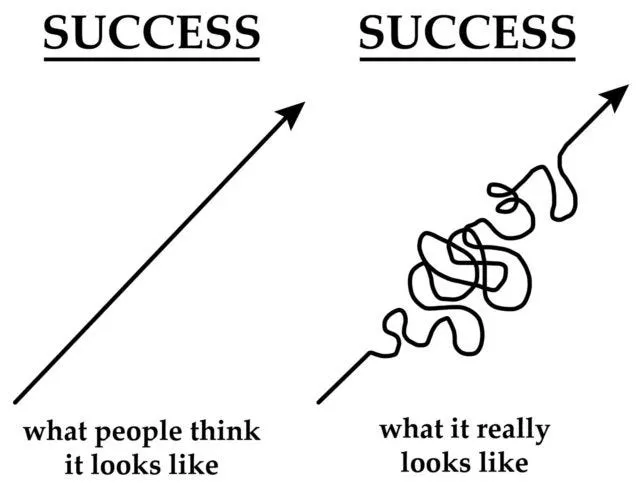
Phew. Ten years is a long time! My son who’s now 12 was a toddler and my 9 year old daughter wasn’t born yet. Kids are a wonderful, if not confronting, marker of time! In this post I reflect on our decade long journey in workplace learning; the highs, the lows and of course, the learnings.
Ten years in workplace learning
What’s changed
Ten years ago organisations would tell us they didn’t want people learning on their mobile phones. Yet they would also tell us that learners were disengaged and tick-a-box learning wasn’t effective. We could see the benefits of mobile learning and quietly suggested people try it. How times have changed - now people can’t get off their phones!

We’d also come across the concept of microlearning and believed it was well suited to learning on the go with a few minutes to spare. It was a new approach back then, face to face training was still the dominant delivery method though COVID-19 accelerated a shift to a hybrid approach. Which is a great outcome because it gives organisations the opportunity to ask what’s the best way to deliver learning to meet the learning outcomes. Rather than defaulting to the way they’ve always done it. Since then microlearning has become part of the core mix of learning delivery for many organisations.
In addition to the new methods of learning delivery, learning design has also changed quickly and significantly with the introduction of generative AI. Over time we’ve seen the challenges organisations have with consistently producing high quality learning content. Usually the biggest barrier is time. Time to administer, brief, liaise with SMEs, create and review content, and to get learners to engage with it. Generative AI is well positioned to help reduce these barriers and that’s certainly how we’ve approached it at Yarno.
What’s stayed the same
Some things are still the same. We still hear about legacy Learning Management Systems (LMS) that are clunky and hard to use. It’s a real eye opener how long some of these older systems hang around, how they get embedded into an organisation and are hard to move away from. It was one of the most prevalent themes from our research with L&D and HR managers 10 years ago!
We still hear about poor learning engagement. Most large companies require each employee to complete mandatory compliance and/or OH&S training. The metric is usually completion and learner engagement is poor. They just want to click next, next, next until they're done. Then the learning department gets really excited about more personalised, self-guided learning that is far more relevant and the employees are like ‘I just don’t have time for that’.
Well researched learning principles such as spaced repetition, gamification, active recall and interleaving are still largely absent from much of workplace learning. We’ve been vocal about the benefits of these principles for the past ten years and will continue to be! These principles are core to the Yarno platform and we know they’re critical to creating lasting change from learning. Something that has motivated us from day one.
L&D still finds it challenging to get budget for learning. There’s often not much leftover after mandatory compliance and safety training and they’re challenged to find time for capability focused learning.
We still see two distinct types of learning in organisations: compliance based learning (usually tick-a-box) and capability uplift learning (usually linked to a performance metric). These two mindsets and approaches are diametrically opposed. Historically compliance training was (and still is) framed as mandatory, risk-minimising, audit-ready, and legally aligned. This encouraged a risk-mitigation buying mentality. Regulators wanted proof that the training had been completed. It was an auditable event not a learning event. As a result, compliance buyers didn’t prioritise engagement either. This encouraged tick-a-box training and incentivised LMSs to focus on infrastructure not learning science. And produced much of the training today that has to be done, yet is rarely enjoyed.
Capability uplift learning on the other hand is about growth and improving performance. It’s future skills focused and high engagement is critical. It’s usually optional and ROI focused. And is often more experimental and combines different approaches; face to face, scenarios, microlearning, and small group learning.
Early days
We made many assumptions in the early days, often without realising it. I’ve since learned that anything I’m pretty certain of is probably an assumption, and needs to be tested.
For example, we made the classic founder mistake of rushing to solve a problem that we experienced personally and assuming there was a market willing to pay to solve that problem. For a deeper look at our early mistakes and learning see this blog post: The Yarno story - we’ve levelled up.

Fortunately for us we discovered the truth early on, and invested time in market research to identify problems our customers cared about (hindsight’s a wonderful lens, isn’t it!).
Another assumption we made was that everyone would be tracking training effectiveness. We quickly discovered that that wasn’t true. And still isn’t to this day! Which is a shame because the customers who get the best value from Yarno are clear on the business metrics that learning contributes to. And can demonstrate learning ROI.
Interviewing over one hundred L&D and HR professionals in 2015 we heard their frustrations with their LMSs. And we assumed that in time they’d move to a superior alternative. In reality we’ve learned that LMSs do an excellent job of embedding themselves into an organisation, to the extent that they become part of the furniture. Over time people learn to accept the LMSs limitations and adjust their own workflows accordingly.
Changing behaviour and capability uplift
What do learners need to do differently?
Our vision is to change behaviour with team based microlearning. It’s aspirational because changing behaviour is difficult!
Most workplace training is one and done. It’s compliance focused, with poor knowledge retention and minimal behaviour change. The Return on Investment (ROI) for most forms of training is poor and too often is seen as a cost rather than an investment.
We know there’s a better way! We designed Yarno to change learner behaviour. We start by asking customers about their pain points. We then work with them to solve those problems with microlearning.
We want to know what learners need to do differently once they’ve been trained. Ideally these behaviours contribute to a measurable business outcome. Such as increase in sales, increase in net promoter score or reduction in on-road incidents. They’re some of the ways we can tell that learners are behaving differently.
It took a while to understand that not all learning is created and delivered equally. And that we were focused on a particular category called capability uplift. This type of learning is very different to traditional compliance training, which is primarily focused on meeting legal obligations and managing an organisation’s risk.
We cared about people doing things differently after learning. To demonstrate a change in behaviour that positively impacts themselves and the organisation. That’s still one of our core motivations and differentiators. Unfortunately, it’s not often the driver or outcome of learning. Though over time we have seen a greater focus on learning ROI and impact and more organisations measuring it.
From the genesis of Yarno we’ve committed to provide engaging and effective learning that drives a return on investment. We work closely with our customers, kicking off the engagement with a mind-mapping workshop session to identify business challenges and then write customised content with our learning designers, creating targeted learning that addresses those learning goals. We don’t offer one-size-fits-all solutions. Each learning campaign is designed to support long-term capability development across diverse and often hard-to-reach workforces – whether that’s improving safety outcomes, upskilling product knowledge, or supporting large-scale leadership training.
We’re proud of the results our customers have achieved with Yarno:
- 89% average completion rates
- Over 90% average participation
- 4.5/5 average learner feedback rating
- Customer example: Reduced accidents by 76%
- Customer example: $30,000 savings per month due to lowering damages
- Customer example: 12% reduction in staff turnover in the sales team
- Customer example: 60% increase in like-for-like sales
- Customer example: Increase NPS score by 9 points
- Customer example: 1,300% increase in in-aisle mentions for a product
Achievements we’re proud of
Feedback culture
Feedback delivered skilfully is a gift.

The Yarno Team!
We’re proud of our culture, and relished the chance to create somewhere we want to work ourselves! From the beginning we’ve woven feedback into everything we do, since it’s a critical part of learning and instrumental to growth. Yet unfortunately it’s also not something many of us have positive experiences of. And have never been taught how to deliver and receive it skilfully.
All new Yarnoers are onboarded in our courageous feedback framework. Every month as part of our team learning calendar we role play and dive into feedback scenarios to hone our skills and learn from each other.
We encourage each other to give and receive feedback daily. We have a #thanks channel in Slack that Yarneoers post positive feedback that syncs with our HR platform Small Improvements. Every Yarnoer has a regular 1:1 with their team lead. It’s the Yarnoer’s meeting to check-in, ask questions and raise any concerns.
We run 360 feedback cycles twice a year to give Yarnoers an opportunity to receive feedback directly from the people they spend the most time with, their peers. And we run a performance check-in cycle annually.
Each year our HR partner Amplify HR runs an anonymous employee engagement survey. It’s an opportunity for the team to share their feedback on how we’re doing across a range of categories, many of which are globally benchmarked. It’s a fantastic opportunity to hear what’s going well and what could be improved. Last year I was grateful to see that 100% of the team answered that they would “gladly refer a good friend or family member to my organisation for employment”.
And we focus on hiring and retaining high performers, some of whom such as our CTO and the man who turned our dreams into a reality, Paul Millar, have been with us since the beginning. We aim to set them up with processes and tools to help them succeed, and then get out of their way!
Going fully remote
A culture’s effectiveness revolves around how information flows.
In 2020 when COVID-19 hit we decided to let go of our office space and embrace remote working. It felt like a drastic move at a time of great uncertainty. We learned a lot! Mostly about how to communicate effectively and what’s required for it to happen. To help the team all contributed to an internal communication handbook that was our guide to how we communicate with each other.
The introduction says “The Yarnoer handbook is our guide to how we communicate with each other. It outlines our values, communication frameworks and expectations. It’s a shared document that everyone contributes to, and it will never be finished! It’s our way of ensuring we capture all the little things we do that make Yarno great.”
Principles such as always add context, seek to understand, assume positive intent, default to transparency, make mistakes then own them and over-communicate are explained. It was a significant time investment yet in hindsight set us up for success as we continue to work remotely six years later.
Mental fitness
We train in physical fitness so why not do the same for mental fitness.

We’ve acknowledged the importance of investing in mental fitness and have tried a few different approaches to achieve it. Early on we all worked four days, yet despite our best intentions, Mark, Paul and I weren’t able to take Friday off. We were liaising with customers, taking any meetings we could. We were a startup, trying to find our feet. The day off felt like a luxury that we couldn’t afford.
In hindsight there’s a big difference between Friday’s off at a mature, established business, and Friday’s off at a fledgling startup. Even if I took the Friday off, my mind would stay switched on. (read more about our 4-day week experiment)
In 2022 we introduced six days of paid wellbeing leave each calendar year for full-time Yarnoers. It’s a time for them to invest in themselves and their self-care. We ask each Yarnoer to share what they got up to on their wellbeing day in our #wellbeing Slack channel. They might have gone for a swim, watched a movie, had lunch with friends, read a book, got a massage.
We also introduced doona days. Doona days are for those days when you feel like staying under the doona. You may not be "sick" per see, but you're not in the right mindset to work. Doona days are an effort to remove some of the stigma surrounding mental health and acknowledge that some days we're just not operating at our best. And that's ok.
Since 2021 we have invested in an Employee Assistance Provider (EAP). A safe place for Yarnoers to access counselling and coaching as the need arises. We’ve also invested in training through our EAP such as psychological safety and recognising signs of stress and burnout. The EAP was especially helpful during COVID-19 and the various lockdowns that followed, as we all adapted to our new and fast-changing reality.
Sticking with our principles
We're guided by three principles that have informed how we've thought about Yarno from day one. They are platform first, outcomes focused and play the long game.
Platform first
Leverage a platform to reach hundreds of thousands of learners in a scalable way.
Coming from digital agency backgrounds, Mark and I knew we didn't want Yarno to be a consultancy. We wanted to leverage our experience and learnings to create a platform that can reach a far wider audience.
We're always looking at ways to scale our day to day processes, so that we have a greater reach with the same resources. The platform first lens also helps us to say no to most of the ideas and strategies that we all come up with. At the start of 2021 we felt we were becoming a learning consultancy, so reiterating our desire to be platform first helped us to recalibrate and focus on both our original goal and what we do best - delivering learning at scale.
Outcomes focused
Deliver business and learner outcomes that people care about with learning.
From the beginning we’ve focused on outcomes. The digital agencies we worked at previously measured everything. We assumed the same would be true of learning. How wrong were we!
Historically learning isn’t created with business outcomes in mind. So to help guide our customers towards tangible outcomes, we need to invest time in defining them, and in curating custom learning to drive towards them, while remaining cost competitive. This informs learning ROI, a critical input to learning business cases, especially at a time of cost and system consolidation.
Play the long game
Build long term relationships and trust with customers, partners, suppliers and Yarnoers.
The third principle is to play the long game, to build long term relationships and trust with customers, partners, suppliers and Yarnoers - in essence our community.
Making decisions for the long term is hard! It requires patience and self-belief to invest finite time and energy into a strategy or tactic that may not show results for years. Though we believe it's the right approach for us. In practice we try to focus on one or two niches and then grow from there rather than going for all the things all the time. We say no to anything that we’re not confident will take us towards our goals.
We strive to make important and impactful decisions deliberately and slowly. We view every decision as an experiment and anyone at Yarno can make a decision. For impactful decisions we have a decision template that must be filled out by the Yarnoer who wishes to make the decision. It outlines the background and rationale to the decision, along with alternatives they've considered, upsides and downsides and best and worst case outcomes. They also have to list out assumptions they're making. It's then shared with the team for review and input. Risk is a part of every decision. We try to identify what could go wrong (pre-mortem) and outline strategies to mitigate.
Playing the long game with our team means we invest in them and we believe our people are our competitive advantage. We invest time in our hiring, so that new Yarnoers join us for the long game and level up our culture based on their diverse backgrounds, experience and approaches.
Customer results
We’re incredibly proud of the results our customers have achieved in collaboration with Yarno.
Learner engagement is critical to successful and impactful performance learning. Which is why we’re stoked to achieve an 89% average learner completion rate.
As a feedback focused company we’ve also incorporated feedback into the Yanro platform itself. Learners are encouraged to give feedback on any piece of learning content in-app, and are asked at the end of every learning campaign to rate it out of five stars. The current average learning feedback rating is 4.5/5.
It’s vital that we provide a seamless experience for our admins. This is reflected in our 4.8/5 average customer admin review from our annual customer survey.
A few specific customer wins that speak to our laser focus on demonstrating ROI with our customers, include:
- Supercheap Auto - 9 point NPS score increase in 6 weeks and 60% increase in like for like sales
- Kent Removalists - Saving $30,000 a month in reduced insurance claims, as a result of targeted learning delivered via Yarno
- Advance Care Planning - Up to 30% increase in learner confidence
Read more customer case studies.
Awards

We’ve been fortunate to be recognised by the learning community for our work with customers. Highlights include winning 2 x AITD awards in 2024 for best use of technology in learning and best use of gamification, 1 x ILP APAC learning award for L&D provider of the year 2025, 2025 Breakthrough culture award and the 2025 Brandon Hall Bronze award for best advance in mobile learning technology. See Our Awards for more information on these and other awards we’ve won over the years.
Impact
We’re also proud of our efforts to give back to our community. We are members of Pledge 1%, a global movement that inspires, educates, and empowers companies to be a force for good. Each year we donate a goat to a family in need (via Oxfam) on behalf of our customers - the Greatest of All Time (aka GOATs).
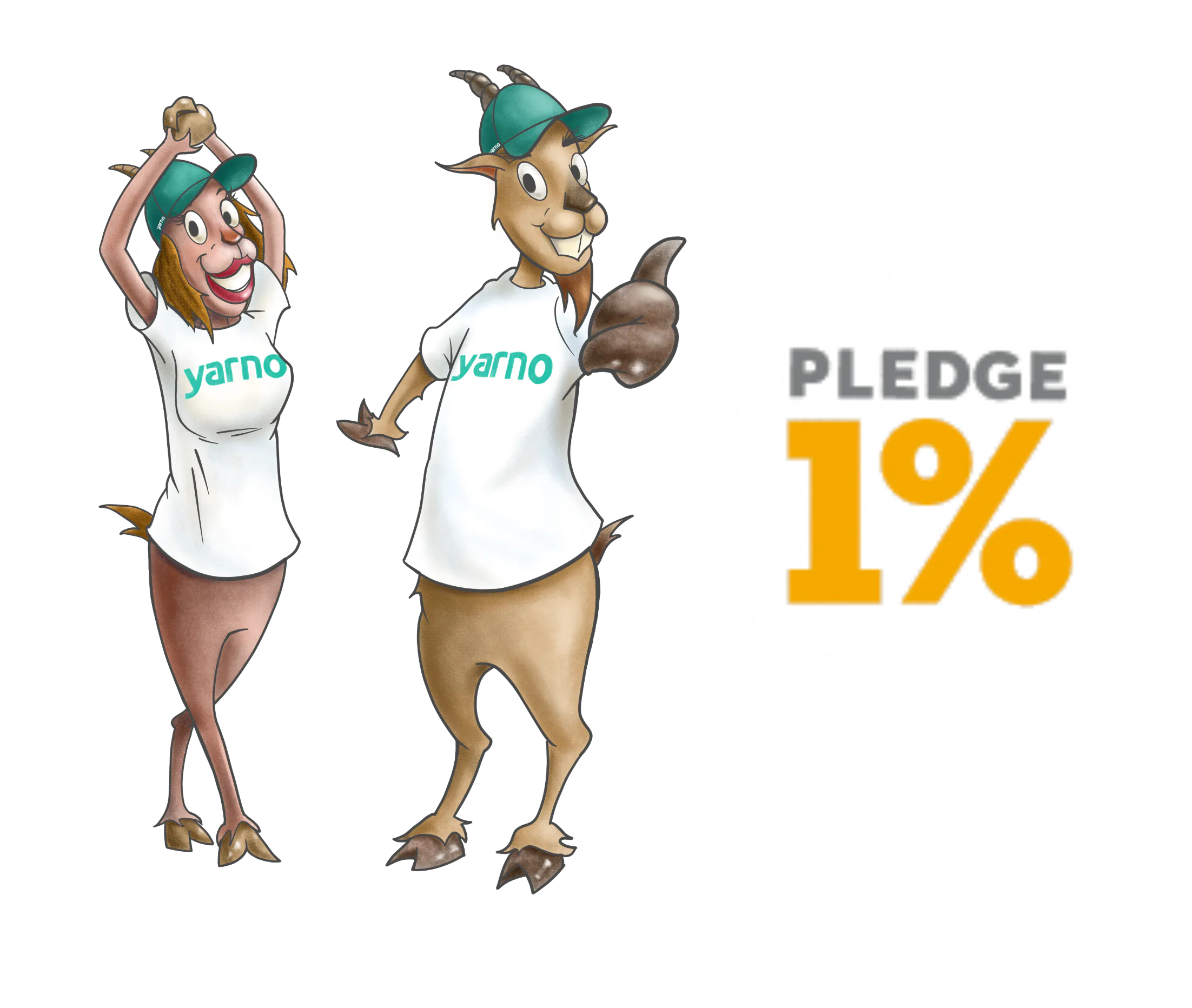
Donating a goat not only gives a family milk, but it also provides fertiliser, allows the growth of vegetables, and provides the tools for breeding. Donations like this contribute to helping people experiencing poverty find new ways to become self-sufficient.
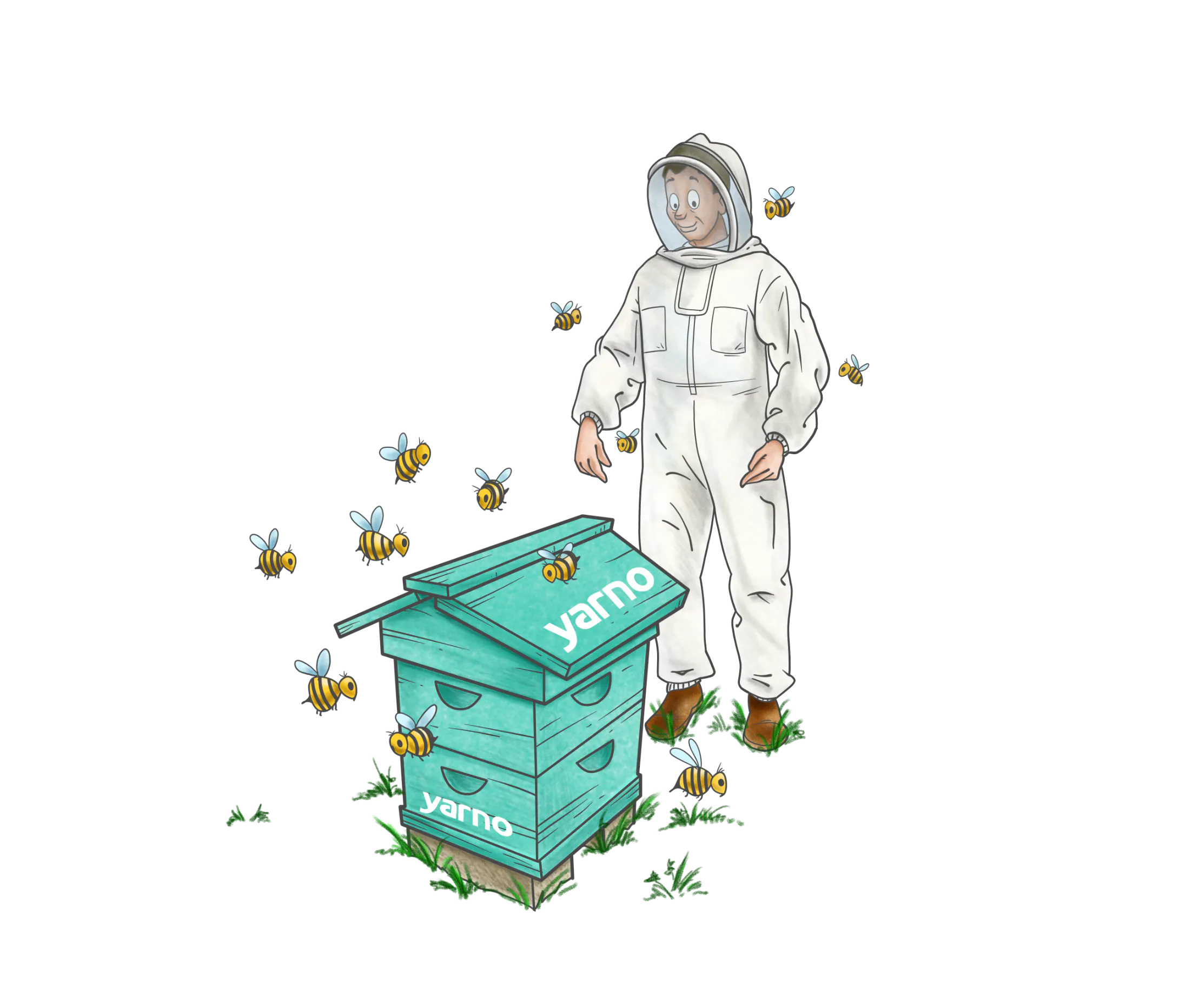
We’ve also sponsored a beehive through our collaboration with Rooftop Bees. Why bees?!
Quite simply, bees are indispensable! One-third of crops worldwide are pollinated by honeybees and they contribute to the preservation of ecological balance and biodiversity in nature. Without bees our food ecosystem would cease to exist as we know it.
The Yarno Platform
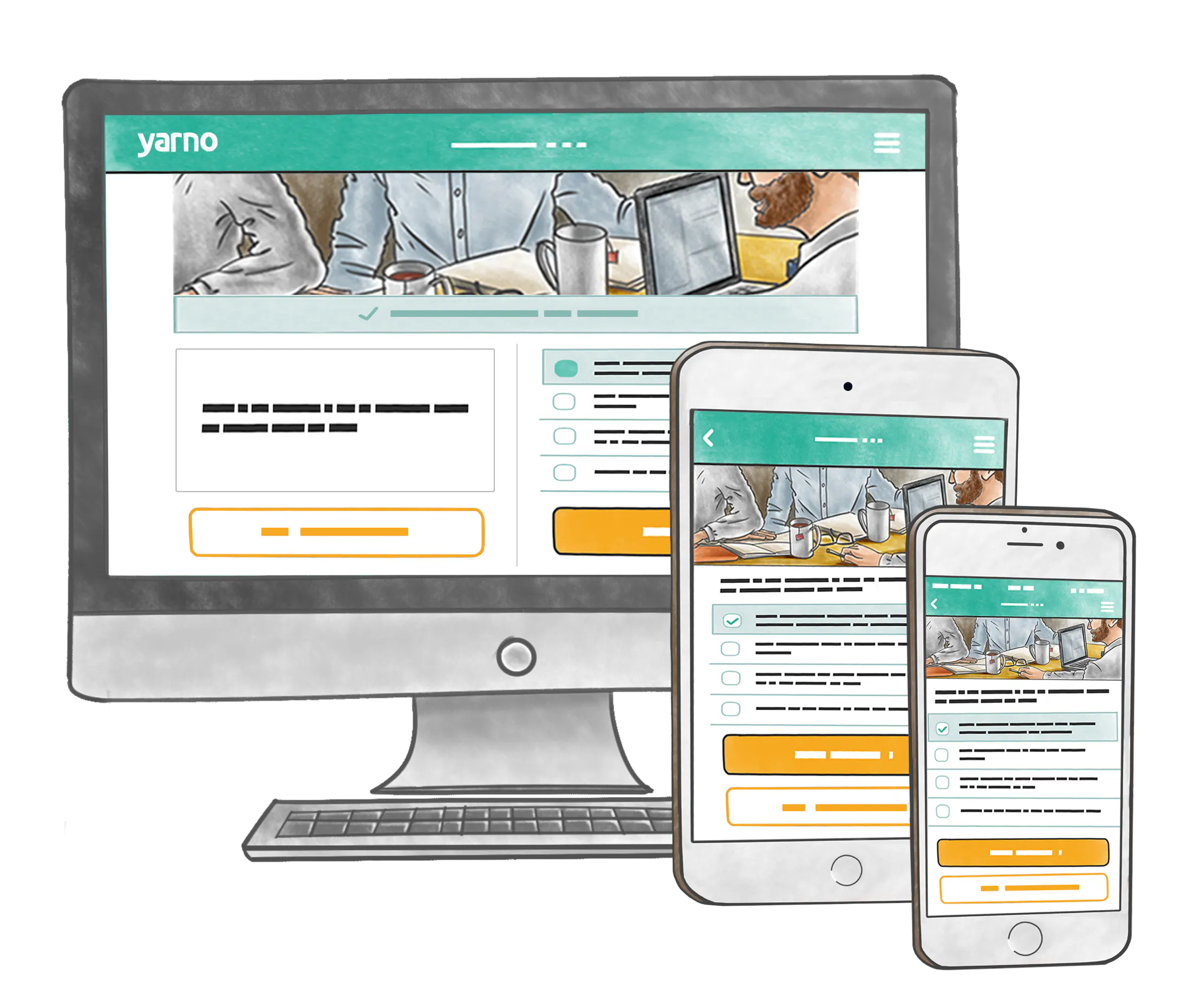
We’ve heard so often over the years people’s frustrations with long e-learning courses delivered by large LMSs often with poor learner engagement and outcomes. We’ve always been motivated to offer a different way to learn.
One way we do this is via team vs team learning. Most learning was and still is self-led. It certainly has its place in a holistic learning strategy yet for time poor learners too much of it can lead to low learner engagement. To really engage learners and get them interested in learning we need a better mechanism. And that is team vs team learning. It encourages friendly competition and gets people talking about (and disagreeing!) what they’re learning.
Yarno transforms learning into a team sport. Leaderboards fuel competition, spark conversations and drive engagement—building a collaborative, high-performing workplace culture that thrives.
We started with a single team vs team learning campaign, called Embed. It leveraged spaced repetition, active recall, immediate feedback and gamification to embed knowledge and understanding over time. Following Embed we introduced a just-in-time learning campaign called Bursts, to provide a quick knowledge check and refresher. Bursts are often used after inductions, toolbox talks or after a new product release.
In the past few years we launched flash facts, confidence surveys and Yarno AI. And we’ve increased the depth of the reporting suite - making it easier to access learning insights and to download relevant reports via the dashboard. Being a small team we remain laser focused on solving our customer’s needs. For example, it took us over two years to launch Yarno AI because we wanted to do it right. We didn’t want to get caught up in the AI hype, and rush AI into the platform for the sake of it.
Achieving SOC 2 Type 2 in November 2023 was a significant achievement for us as a small team. It demonstrated our commitment to best practice information security and privacy, and was a lot of work! It’s pleasing to see industry awareness of the importance of cyber security increasing dramatically over the past few years. As Warren Buffett says, a rising tide lifts all boats. It’s only through the collective cyber secure knowledge and understanding that we can hope to reduce data breaches and hacks.
Here’s to you
Thank you to our awesome customers, partners and suppliers, many of whom have been with us since 2015. We value your trust in us and your willingness to try a new way of learning in the workplace. And a special thank you to all Yarnoers, past and present, who contributed their ideas and perspectives to make Yarno a great place to work and the Yarno platform what it is today.
What’s next
2026 is shaping up to be an exciting year for Yarno. Our aspiration is to strive for learning ROI through outstanding customer and learner experiences. This year especially we’re focused on driving capability uplift for organisations.
To achieve this we’ll continue to deliver high learner engagement, ROI focused learning, a platform that’s flexible and easy to use and personalised customer experiences.
We also plan to roll out a new campaign type, Compliance learning, to complement our existing Embed and Burst campaigns. Compliance learning is designed from the ground up to meet the specific needs of compliance (while also making it engaging in the Yarno way), with compliance focused reporting and automation built in. Launch is slated for mid 2026.
If you’re interested in staying up to date on the latest goings on at Yarno including product releases sign up to The Yarn, our monthly email newsletter.