Five ways AI is reshaping workplace learning (and two ways it's not)

AI has had more hot takes written about it in the L&D world than almost any other topic in the last two years; for an industry that genuinely loves a passionate debate about learning theory, that's saying something.
Some of those takes have been genuinely useful and some have not. So here are five genuine ways AI workplace training is changing for the better, and two to think about avoiding.
The five ways it's helping
1. Killing the blank page
The single biggest time-sink in content creation has always been the empty document. AI has more or less solved that. Give it a policy, a set of learning objectives, or a rough brief, and it'll produce a workable first draft in seconds. This frees up L&D teams to spend their time on the part that actually needs a human: judgement, tone, and deciding what matters.

2. Turning dense documents into content people will actually read
Legislation, policy documents, compliance frameworks: none of it was ever written to be engaging, and translating it into plain language used to eat entire days. AI is genuinely good at a first pass here, taking forty pages of dense regulatory language and turning it into something a frontline worker might actually finish reading. (A human still needs to check it against the source. More on why in a moment.)
3. Making better quiz questions, faster
Writing a good multiple-choice question is harder than it looks, and writing three plausible wrong answers is harder still. AI is quietly excellent at generating distractors, the "nearly right but not quite" options that make a quiz actually test understanding instead of process of elimination.
4. Surfacing patterns humans miss
Where organisations have a reasonable volume of assessment or engagement data, AI can spot patterns that would take a person hours to find manually: which topics people consistently get wrong, where knowledge decays fastest after training, which cohorts need reinforcement. This is where AI starts to genuinely change strategy, not just content production.
5. Lowering the cost of iteration
Because content can now be produced and revised so quickly, it's easier to test, tweak, and improve rather than treating it as a one-and-done deliverable. That's a meaningful shift. Learning content can now evolve with an organisation’s needs.
The two ways it's making things worse
1. Hallucinated compliance content
This is the one that deserves the most attention, and gets the least. AI models will state legislation, thresholds, and dates with total confidence, whether or not they're correct, and the tone doesn't change depending on which is true. For something like recent workplace health and safety changes, that's not a minor content error, it's genuine legal exposure. Every piece of AI-drafted compliance content needs a human expert checking it against the actual source. Not "reviewing for tone." Checking the facts, line by line, every time.
2. Mistaking volume for value
Because AI has made content production so fast and so cheap, it's tempting to produce far more of it, more often, and call that progress. It usually isn't. The forgetting curve doesn't care how quickly a module was written. Without spacing, retrieval practice, and reinforcement over time, an AI-generated module suffers exactly the same fate as a slow, expensive one: forgotten within days. More content, delivered faster, without a strategy behind it, is just a bigger version of the same old problem.
What this looks like in practice
Picture two mid-sized companies, both rolling out a new workplace safety policy at the same time. Both use AI to draft the training content. Both get a polished, professional-looking module in a fraction of the usual time.
Company A treats that module as the finish line. It gets pushed out once, in a single sitting, ticked off in the compliance register, and filed away. Six weeks later, an audit finds that most staff can't recall the actual reporting thresholds in the policy they supposedly completed. The content wasn't wrong, it was just delivered the way training has always failed: once, in full, and never revisited.
Company B treats the AI-drafted module as raw material rather than a finished product. A learning designer checks it against the actual legislation, breaks it into smaller chunks, and schedules short retrieval quizzes over the following month, a few questions a week rather than one long module. Six weeks later, staff can still recall the key thresholds, not because the content was better written, but because it was reinforced the way memory actually works.
Same AI tool. Same starting draft. Completely different outcome. That's the whole argument in miniature: AI changes how fast you can produce training. It doesn't change what makes people remember it.
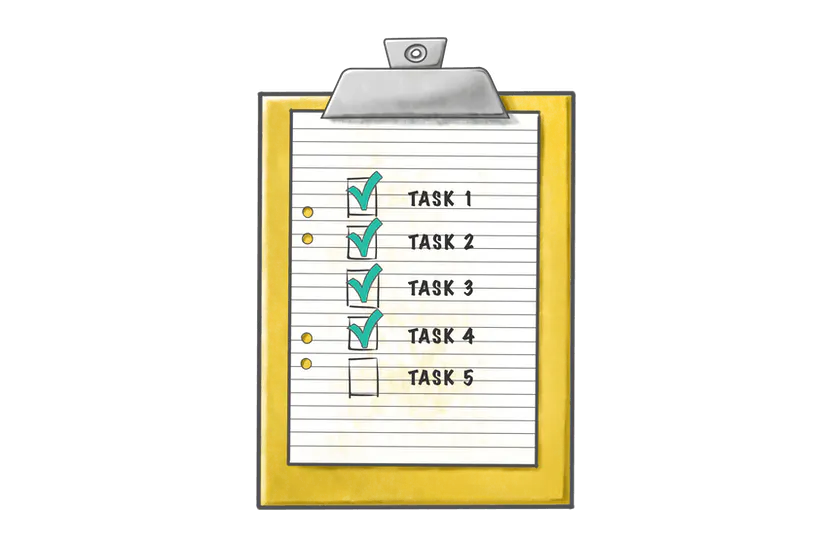
A practical AI checklist for your learning content
Before scaling up AI use across your learning content, it's worth running through a short list of questions.
- Is there a knowledge retention plan with your content plan? We highly recommend thinking about how you can help your learners retain the information.
- Who checks accuracy on every AI-drafted piece of content and how often? "We reviewed it once" probably isn't going to cut the mustard. Adding in a content review plan (especially if including compliance content) is a high five from us.
- Which topics are off-limits for AI-only drafting? Psychosocial safety, harassment, and other sensitive material usually need a human voice from the start, not just a human edit at the end.
- Are you measuring content produced, or knowledge retained? Win, win for your learning ROI if you're looking at both.
- Is a named person accountable for every module that goes live? Creating content quickly is great, just make sure you have that human touch for accuracy and tone.
The real question isn’t whether you’re using AI for your learning content. It’s whether you’re using it well. Getting that right takes more than the right tool, it takes good learning design and a clear strategy.
Frequently asked questions
Is AI going to replace L&D teams?
AI is genuinely useful for first drafts, translating dense documents, and spotting patterns in data, but deciding what to reinforce, checking accuracy, and handling sensitive topics still needs human judgement.
Is it safe to use AI to write compliance training?
Only with a human expert checking every piece against the actual source legislation, every time. AI models can state legislation, thresholds, and dates confidently, whether or not they're correct, and the tone doesn't change depending on which is true. Treat AI-drafted compliance content as a first draft, not a finished, trustworthy product.
What's the best way to use AI in workplace training?
Use it to speed up production, first drafts, plain-language translations of dense documents, quiz distractors, and data pattern analysis, while keeping the actual learning strategy (spacing, retrieval practice, reinforcement over time) with a real human.
Does AI-generated training content need to be fact-checked?
Yes, always, particularly for compliance, legal, or policy-based content. AI hallucination risk doesn't disappear because the content reads well or sounds authoritative.